
In London, a gringa from Califas makes Mexican queso (video)
In Peckham, London, California expat Kristen Schnepp makes Mexican-style cheeses at the Gringa Dairy. [Video by Terra Nova.]
Today’s the day the music – and Ritchie Valens – died
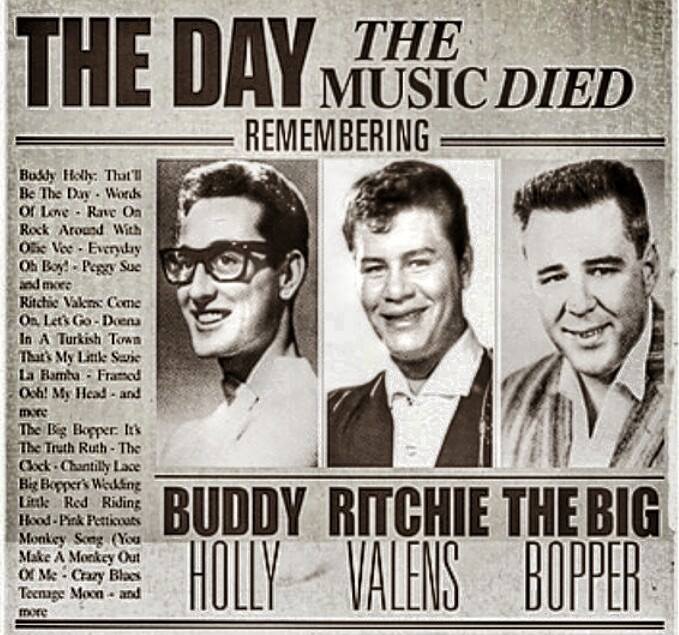 Today marks the sad anniversary of “the day the music died,” the February 3, 1959 airplane crash that took the lives of rock stars Buddy Holly, the Big Bopper and Ritchie Valens.
Valens, from the L.A. suburb of Pacoima, was born Richard Steven Valenzuela and some consider him the father of Chicano rock. Pocho Valens didn’t espeak Espanish, so he sang the lyrics to La Bamba from a phonetic cheat sheet.
Click for music videos of Chantilly Lace from the Bopper, Peggy Sue by Holly and the actual Valens La Bamba recording sessions, plus a Don McLean performance of The Day the Music Died.


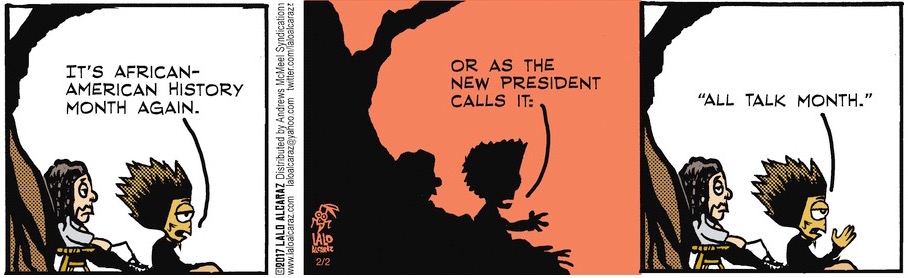
Orange President salutes Black History Month (transcript, audio, toon)
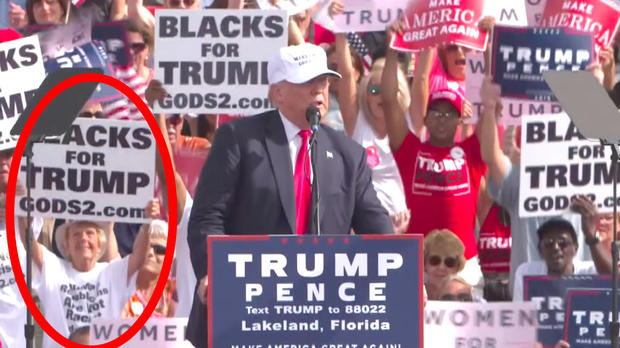
Our historic President knows more about Black History Month than the last President, who was not so historic.
And instead of teaching us in American, the President is going to speak English to you, you know, to class up the history of this carnage-loving people, his African-Americans.
Our speech researchers here at the National Pochismo Institute took Wednesday’s speech transcript and ran it through a text-to-speech thang with a British-accented robo-bloke. And it sounds classy! You’ve never heard classy as bigly as this — all the words — the best words — plus a Ben Carson shoutout — and some bragging, lots of lies, and ignorance in abundance. Not to mention dissing CNN and non sequitors, slang, and muddled thinking. You’re welcome, mate.
Mira el transcript, with notes from POCHO’s Comic Saenz, and audio below:
Mas…Orange President salutes Black History Month (transcript, audio, toon)
Construction workers complain their jobs went to Mexico (toon)
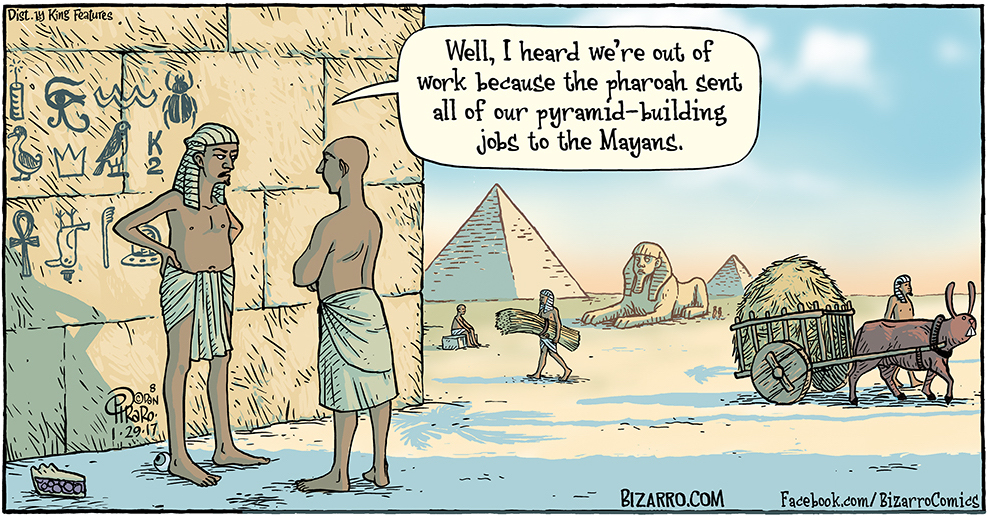
[More like this from Dan Piraro at Bizarro.com.]
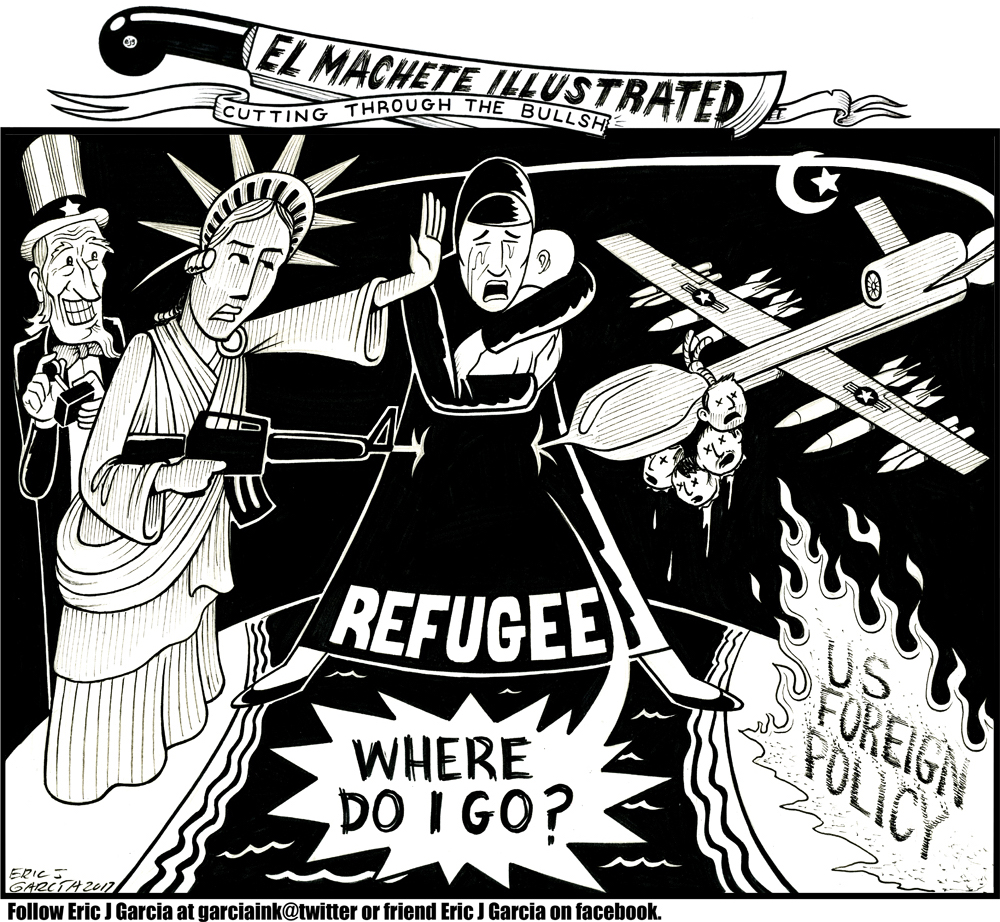
La Realidad: The Realities of Anti-Mexicanism
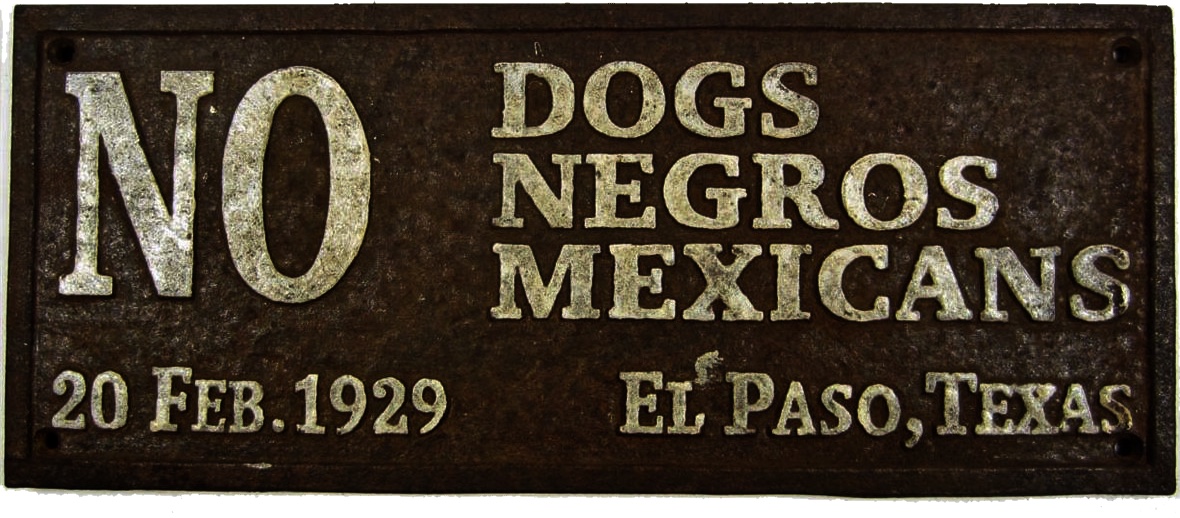
“Where have you been, my darling young one.”
– A Hard Rain’s Gonna Fall by Bob Dylan
U.S. anti-Mexicanism is a race premised set of historical and contemporary ascriptions, convictions and discriminatory practices inflicted on persons of Mexican descent, longstanding and pervasive in the United States.
This essay conceptualizes, historicizes, and analyzes anti-Mexicanism, past and present, concurrent with some references to sources. Here, the emphasis is conceptual, not historiographical. Anti-Mexicanism is a form of nativism practiced by colonialists and their inheritors. Mexicans, being natives, became targets of aggressive practices inclusive of the violence directed at Indigenous and African peoples. The words “Mexican” and “Mexico” speak to Indigenous heritages. The origins of the thought and meaning of “Mexican and “Mexico” speak to historical native roots. White supremacist ideologues have understood this.
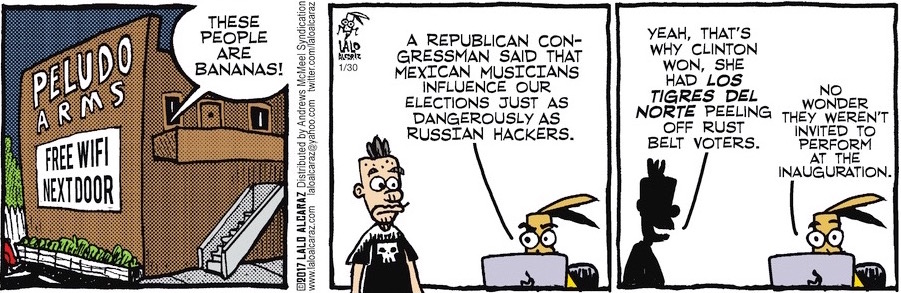
How will Mexicans deal with Trump’s border wall? (video)
Mexican cartoonist Patricio mocked the idea of a border wall in 2009 with this episode of La Enchilada Completa — the Whole Enchilada. [Those voices at the end? A happy customer sure does like that high quality scrap metal and our hero remarks that thousands more kilometers of metal are available.]
In Japan, kids emulate what they think is ‘Chicano Culture’ (video)
There’s a subculture of kids in Japan that wants to be “Chicano”, although they can’t seem to differentiate between gang-banging cholos and your basic, every day Chicano. [Chicano チカーノ is a video by Louis Ellison.]
PREVIOUSLY ON HECHO IN JAPAN:
Mas…In Japan, kids emulate what they think is ‘Chicano Culture’ (video)
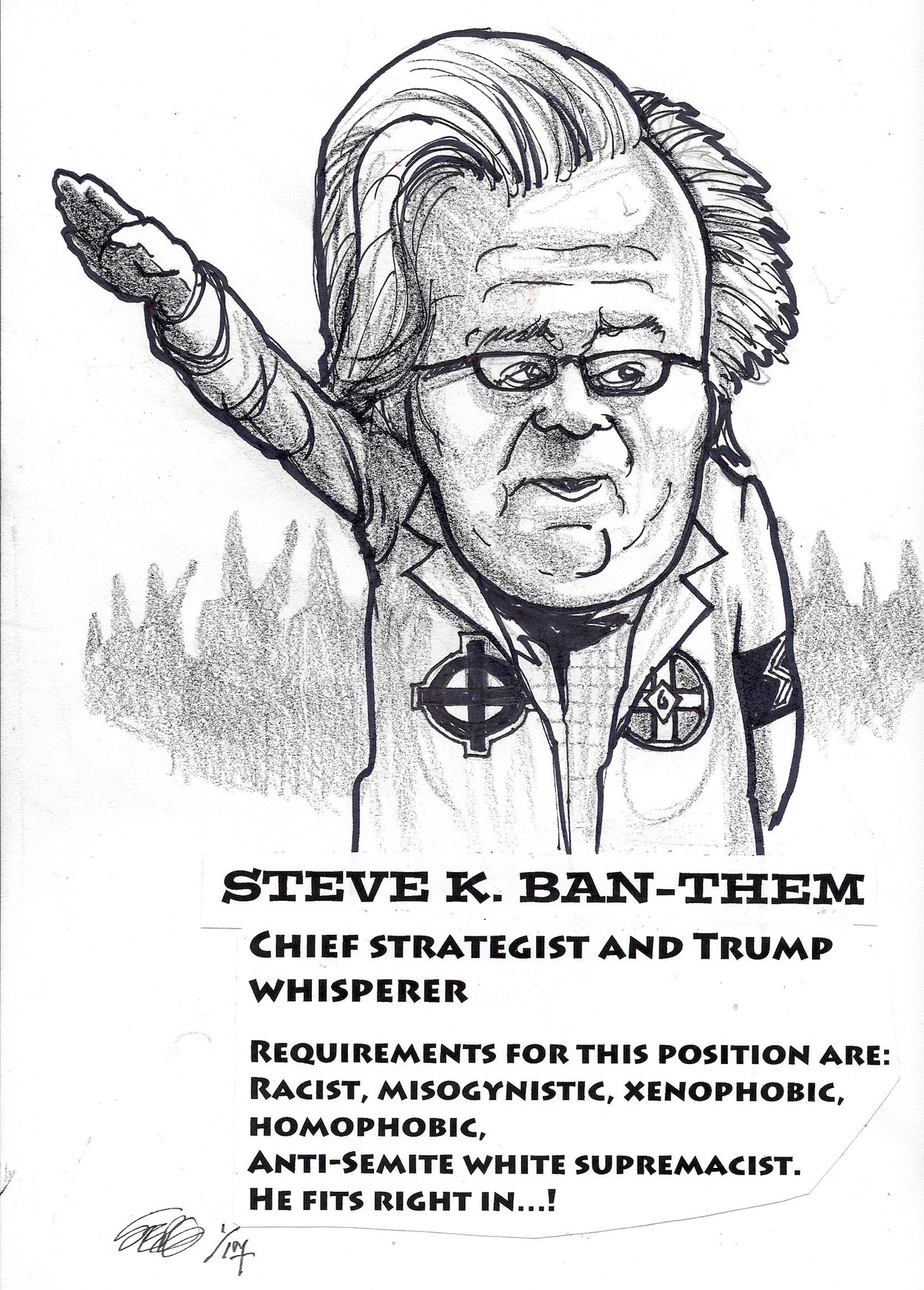
I went to Trump Tower, the Belly of the Beast (videos, photos)
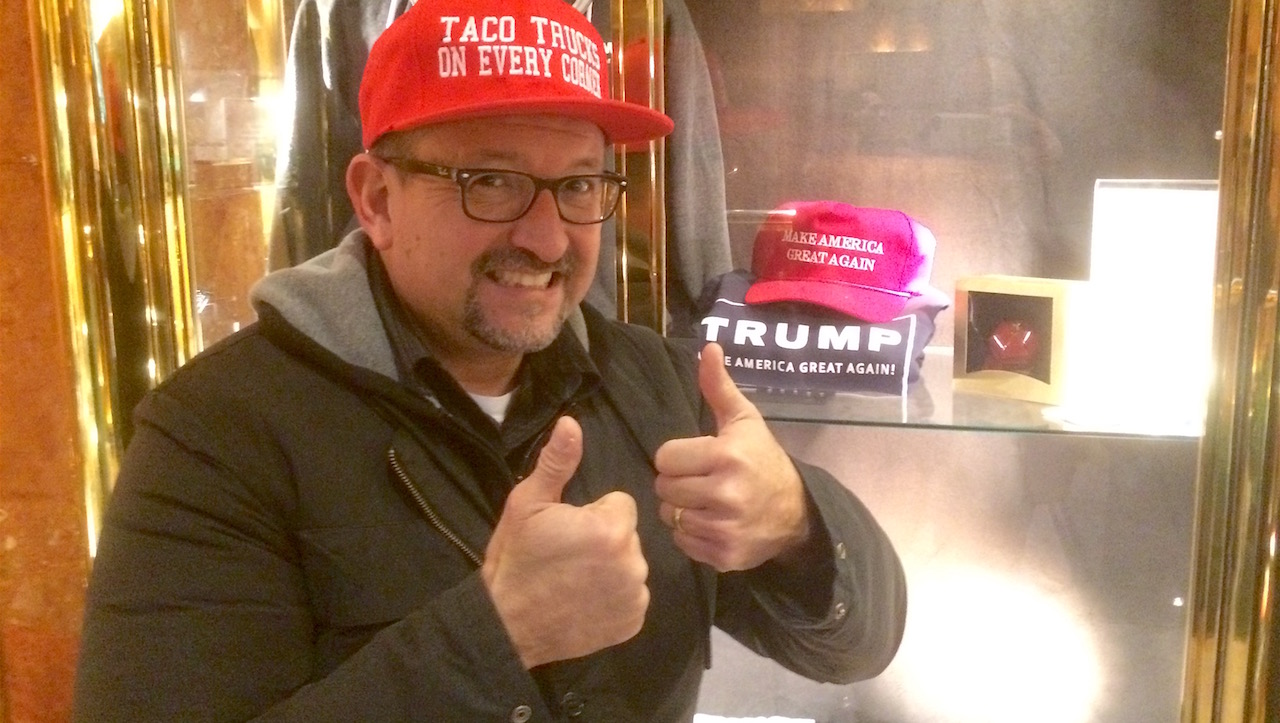 Hi. It’s me, Jefe-in-Chief Lalo Alcaraz.
I just capped a week of touring the East Coast speaking at Harvard University’s Beyond Tomorrow arts conference and a presentation at LatinoJustice PRDLEF (the legal nonprofit where Supreme Court Justice Sonia Sotomayor once defended Boricua rights) with a visit to The Eastern White House, Trump Tower.
I was joined by my NYC sherpa, Jeronimo Saldaña, creator of the MAKE MEXICO GREAT AGAIN hats, when we foolish ventured into the Golden Toilet that is Donald Trump’s supervillain lair.
Outside, we encountered heavy security, including barricades, NYPD wagons and four or more combat-armed Secret Service agents as doormen, and many more inside. After going through metal and bomb detector security, the guard told me, “This is the Secret Service. We don’t mess around.”
Mas…I went to Trump Tower, the Belly of the Beast (videos, photos)
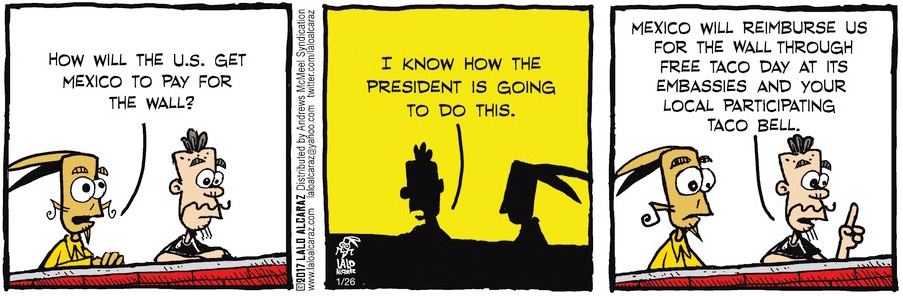
Donald Trump to Mexico: This is a Declaration of Wall! (toon)
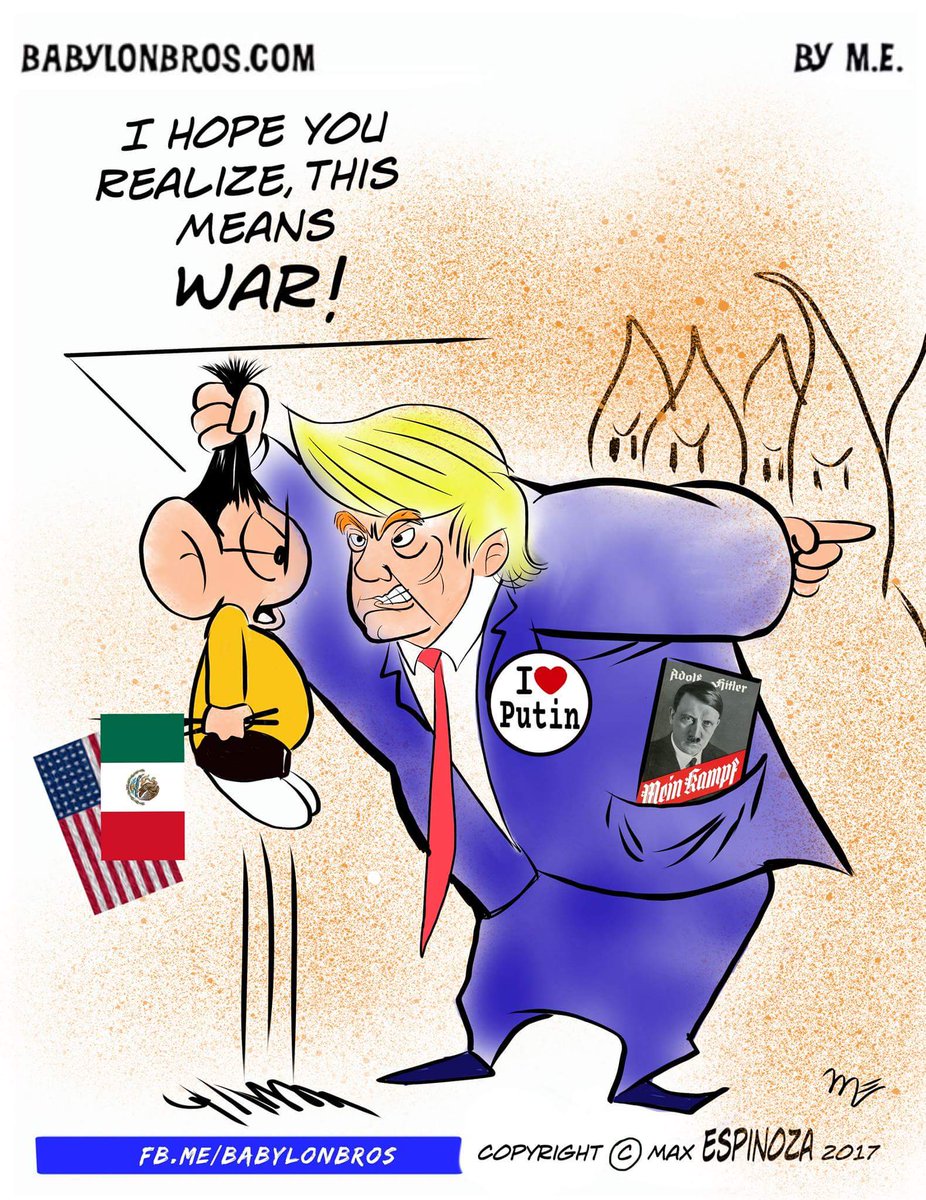
[Max Espinoza toons for the BabyLonBros.]
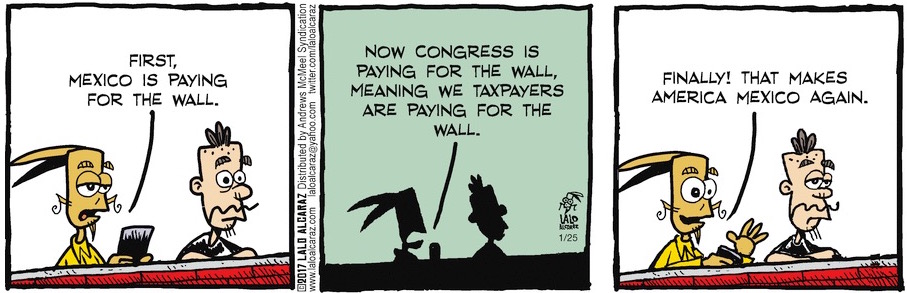
Can Donald Trump use his own resources to pay for a wall? (toon)
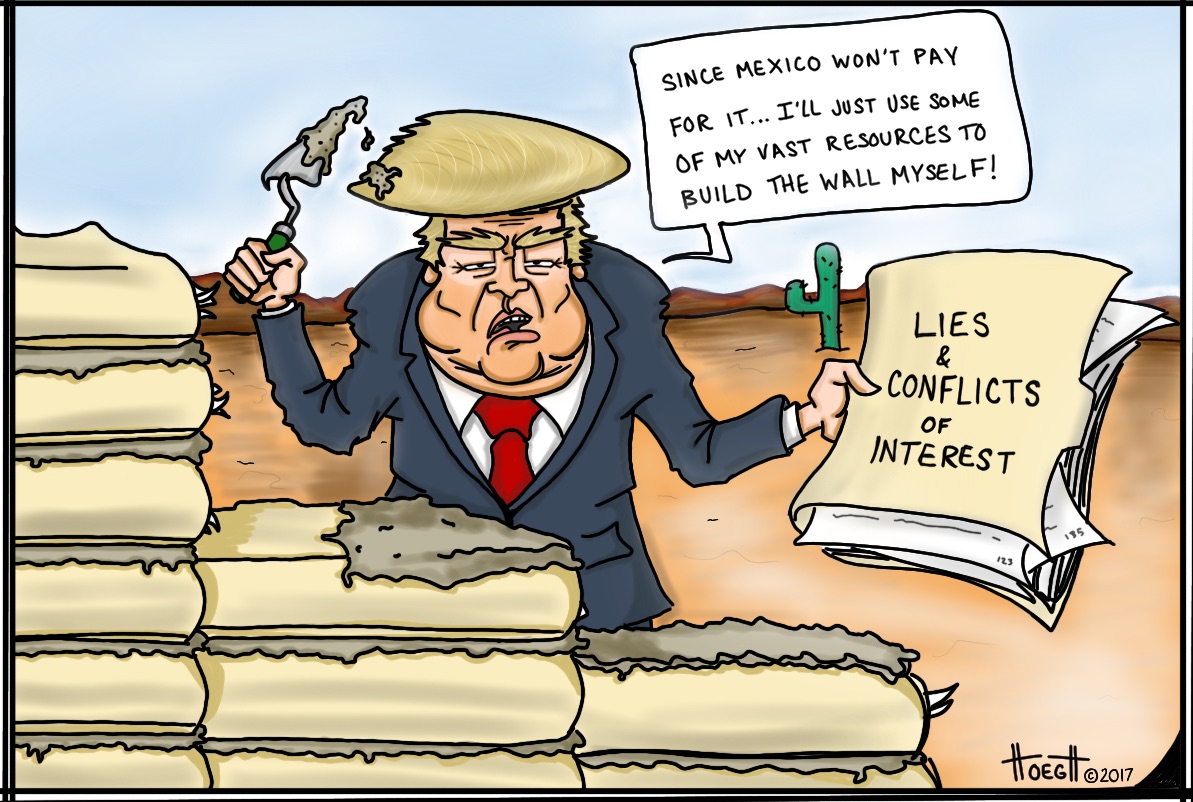
[Payton Hoegh toons regularly at Weekly Political dot com.]
Mariachis vs Pink Floyd: Another brick in the wall? Nunca! (video)
Something there is that doesn’t love a wall, for example Mariachi Cabos vs Pink Floyd’s Another Brick In the Wall. Winner: MARIACHI CABOS!
POCHO History 101: ‘Alternative Facts’ about American slavery (toon)

In Paracho, Michoacan, they still make guitars by hand (video)
In Michoacan, Mexico, the town of Paracho de Verduzcoo has a unique claim to fame. Many in the town of 30,000 — known as the “Guitar Capital of Mexico” — make their living crafting guitars. The streets are lined with shops featuring some of the most beautiful guitars in the world. Director Andre Arevalo met a guitar maker from Paracho and asked him a few questions about the past, present and future of guitar making in his pueblo.
We’ve asked for his name and the name of his shop so we can give him props.
While we’re waiting for that info, and in celebration of the artisans of music, here’s an unsolicited plug for a POCHO amigo just like that who doesn’t know about this:
Mas…In Paracho, Michoacan, they still make guitars by hand (video)


Manu Chao’s “Words of Truth” fights “alternative facts” (video)
International star Manu Chao taps a reggae groove to point out that Words of Truth are what we need now.
