
Alex Gorosh took a telescope around the streets of Los Angeles to give strangers a close-up peep of the moon.
Cultura
It’s Not News to Us

‘Cuerdas en la vida’: Cut the ties that bind in order to be free (video)
Film-festival favorite Cuerdas en la vida – Ropes in Life reminds us that we are in charge of our own freedom. This Jalisco-born stop-motion video has a killer concept, startling models/marionettes, amazing live action and sound integration, plus pinpoint pacing. [Directed by Gerardo González Pérez.]

Around Our Town on St. Paddy’s Weekend: Where to go, what to do
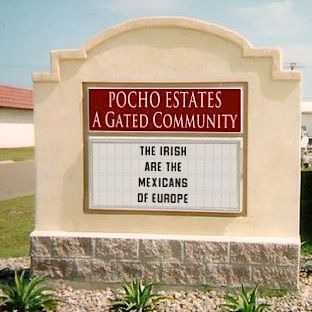 LUCK OF THE IRISH: Look for a pot o’ gold at the end of the rainbow all weekend long at Gustavo O’Grady’s Bar y Grill on East Olmos Boulevard.
The popular hangout will serve corned beef tacos, potato-stuffed chiles rellenos and beer-marinated enchilada irlanda sliders at $1 each during Happy Hour.
Happy Hour, you lucky leprechauns, lasts all weekend long, and GO’G’s always keeps 100 bottles of beer on the wall.
For $144 and a signed damage waiver, you high-rollers can try GO’G’s One Night in Dublin Lifestyle Tasting Menu — generous pours of Guinness and Jameson’s followed by a course of impassioned story-telling and poetry, more pours, then a rich hour of melancholy singing, pours again, all capped off by your choice of a bar fight or vomiting in the alley.
Wear a wee bit o’ green and Gay Gus O’Grady himself will kiss your Blarney Stone.
Mas…Around Our Town on St. Paddy’s Weekend: Where to go, what to do
Bang Data’s new music video is puro ‘Loco’ (NSFW)
Life is crazy and it’s hard to keep it together, but we must persist for the children. Bang Data’s new music video is puro Loco. That’s why it’s also the title track from Oakland-based alternative band’s third studio album. [NSFW F-bomb.]
PREVIOUSLY ON BANG DATA:
You never know what will happen next at SARAPE’s GRILL! (toons)
 POCHO amigo Arnie Bermudez has started up a new cartoon series set at your favorite local taqueria, SARAPE’s GRILL. Let’s take a look, shall we?
Mas…You never know what will happen next at SARAPE’s GRILL! (toons)
In Miami, this San Diego homie keeps it real at ‘The Taco Stand’ (video)
Lookin good in Miami! San Diego pocho Fernando Mendez keeps it real at The Taco Stand, 313 NW 25th St., where, apparently “raza” means “squad.” The taqueria has 5 stars on Yelp!
This is how they make a basic, everyday burrito in Art School (videos)
For David Tang’s and Justin Ye’s final stop-motion project at [school unknown] they made this Fantasy Burrito.
It would go great with this fantasy stop-motion guacamole, we’re so sure:
Mas…This is how they make a basic, everyday burrito in Art School (videos)

This is true story of my fight to earn the right to be Smiley #1
 My mother, Carmen, often sent me to La Paloma Market, while my brother Salomon watched I Love Lucy re-runs. We lived in East Los Angeles’ Ramona Gardens housing project, where I had to be selective about the routes I took.
Since I feared the barking dogs along the alley, I always took a shortcut through the hill that was controlled by a local gang, the Hill Boys. The homeboys never bothered me on my daily trip for groceries, especially since we attended Murchison Elementary School at the same time.
Mas…This is true story of my fight to earn the right to be Smiley #1

Tired of standing over a hot comal, flipping tortillas? We’ve got robots!
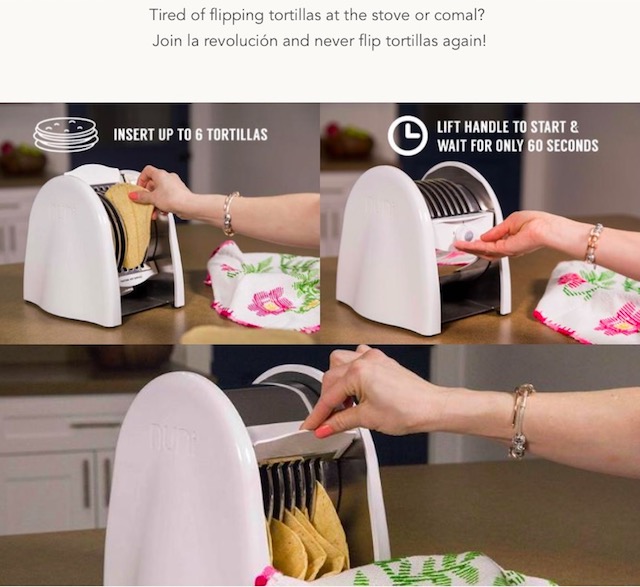 A middle class Anglo family, tired of Mom’s home cooking, join la revolución with the help of an electric tortilla toaster.
Mas…Tired of standing over a hot comal, flipping tortillas? We’ve got robots!
New generation defends San Diego’s Barrio Logan, Chicano Park (video)
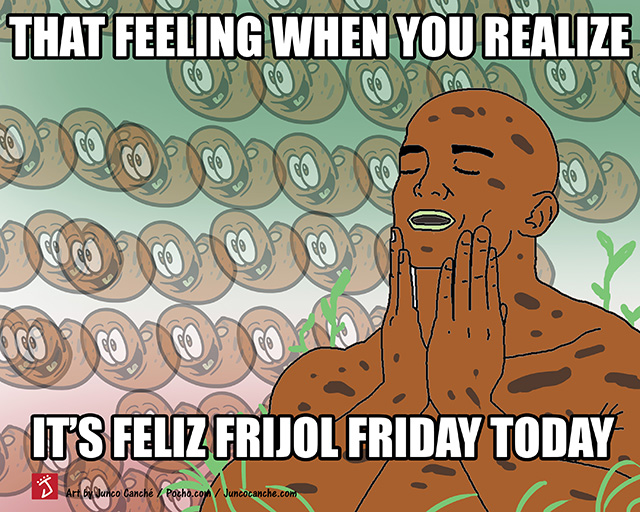
It’s been five decades since San Diego’s Barrio Logan activists (like POCHO fave Chunky Sanchez) fought for Chicano Park. Now a new generation is stepping up to make sure this vital community resource thrives. One of them is POCHO’s Chicano Punk Rock Artesano Joaquin “Junco” Canché who is concerned with the effects of gentrification. (His segment starts at 5:35.) [Video by Voice of San Diego.]
Video Recipe: Delicious crispy cricket tacos (tacos de grillos)
Would you eat tacos made from crickets (grillos)? How about grasshoppers (chapulines)? Why not? Don’t be squeamish. Crickets are kosher, you know!
PREVIOUSLY ON CHAPULINES:
Mas…Video Recipe: Delicious crispy cricket tacos (tacos de grillos)
“Dreamers” | Oil on Canvas | 36″ X 24″
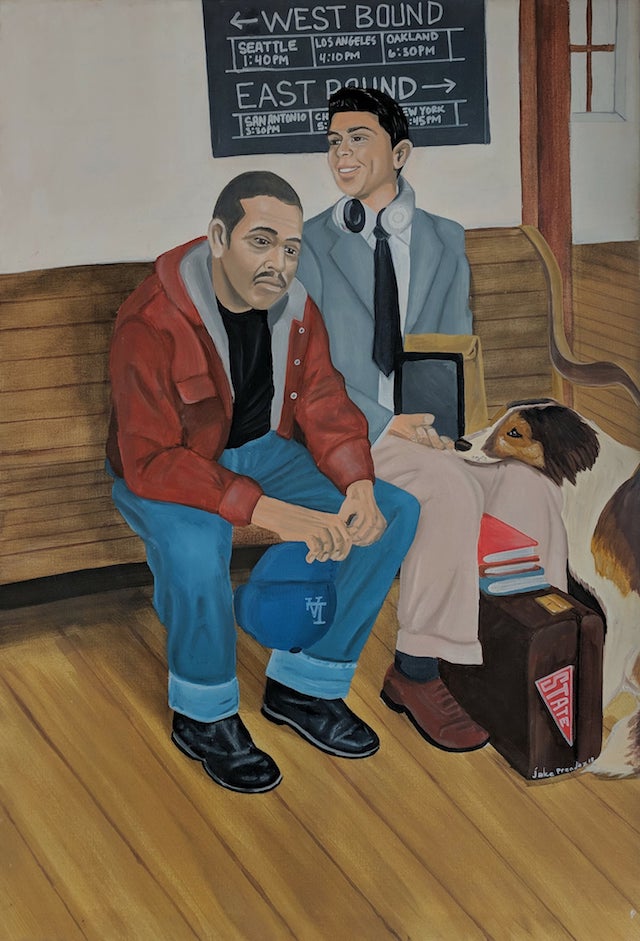 I am so excited to unveil my newest painting.
Dreamers is the second in my series Norman Rockwell in Post-Racial America.
I decided to reinterpret the painting entitled Breaking Home Ties (below).
Instead of the rural farmworker with his son going off to college I used a jornalero father seeing his son off to college.
I smoked weed before it was legal: 1 Chicano, BD (before dispensaries)
By John Edward Rangel
Smoking cannabis became a regular form of medication for me when I was 15 years old. That was in 1977. Back then the U.S.A. was still reeling from the Vietnam War, Watergate and something the media referred to as “The Generation Gap” (we called it arguing with our parents).
These were trying, confusing times (much like now), and for a teenaged Chicano in East L.A. who had to deal with the added effects of institutionalized rascism (big white cops called us “Pancho” and beat us with gusto) it was sometimes overwhelming. Getting numb helped me cope.
Almost every adult I knew medicated on something.
Mas…I smoked weed before it was legal: 1 Chicano, BD (before dispensaries)
The Mexican Standoff made a video about the border wall, ‘El Muro’ (video)
DREAMers from SoCal’s alt Mex music scene teamed up as The Mexican Standoff to record El Muro because they have feels about Trump’s wall. They never say his name, however.
On YouTube they explain:
Mas…The Mexican Standoff made a video about the border wall, ‘El Muro’ (video)
WATCH: Mexicans + African-Americans + Gabachos: Mississipi ❤️ ‘hot tamales’
First, Mexicans from just over the border brought tamales to the fertile Mississippi Delta. African-Americans soon realized the Mexicans had a good thing going in these little, corn-husk-wrapped magical meat pies.
And, sure enough, area whites realized the masa miracles weren’t just for people of color anymore. And that’s why Mississippi loves tamales.
Yes, we know proper Spanish means it is one tamal, two tamales. But we’re not proper Spanish speakers or proper anything, actually.
COCO’s Miguel (Anthony Gonzalez) sings ‘Remember Me’ to L.A. City Council (video)
Voice of COCO’s Miguel, Anthony Gonzalez, backed by Mariachi Divas, performed Remember Me for a packed audience in the chambers of the L.A. City Council on Coco Day, Tuesday.
Today is COCO Day in the City of the Angels! #RepresentationMatters
 COCO and Black Panther are a double watershed moment in Hollywood film history.
Mas…Today is COCO Day in the City of the Angels! #RepresentationMatters

Chillest music vid ever: Mexican national anthem on ICE 45 RPM record
During the 1990s, when Luis Echeverría Álvarez was president of Mexico, technicians recorded a presentation of Mexicanos, al grito de guerra, the Mexican national anthem. In 2014, artist Iván Abreu “pressed” the anthem onto a 7-inch 45-RPM record made of ice. Listen before it melts! Or maybe listen WHILE it melts, starting about two minutes in.
This is your official guide to chile pepper hotness (infographic)
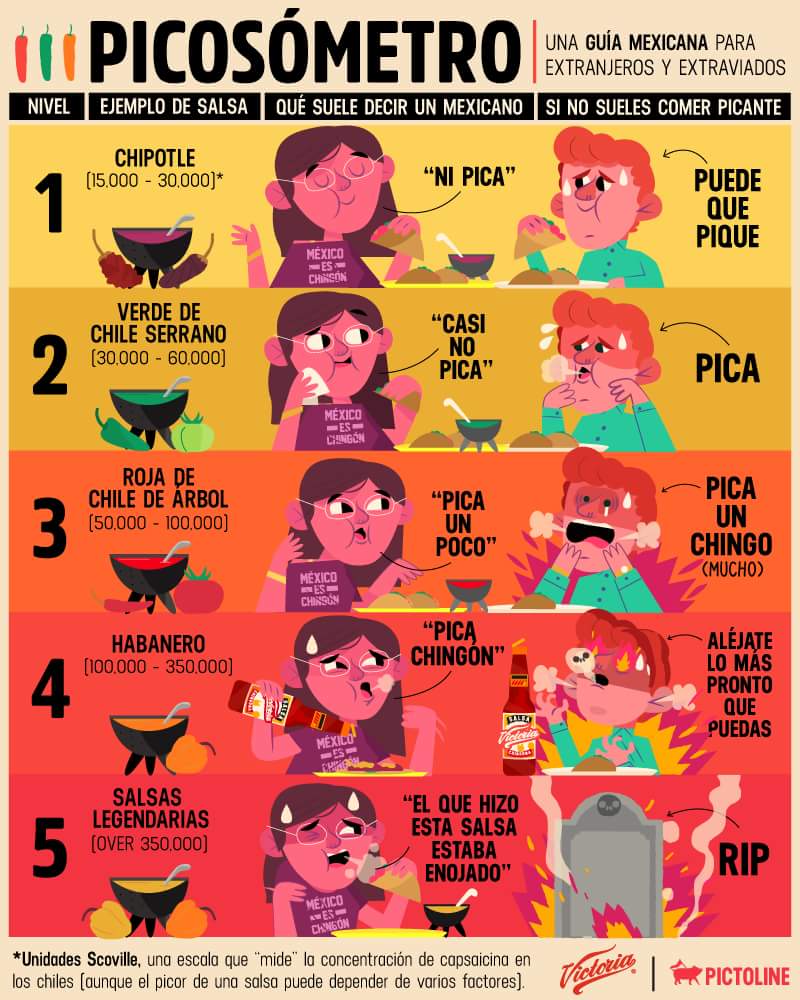 [image via PICTOLINE. All rights reserved.]

POCHO HISTORY 101: ‘Americanizing’ Mexicans by changing their diet
 Is what you eat political?
Do you accept the claim that your food choices determine your social order in this world?
And do you accept that conforming to white American norms in eating is important in transforming people of color into better citizens? Will assimilating one’s food choices make people of color less prone to crime and revolutionary tendencies?
Believe it or not, this is something that has been explored and well discussed in our communities for over a century.
In the 1920s in Southern California there were social reformers who were sent on transform the eating choices made by the public, especially among the immigrant working-class.
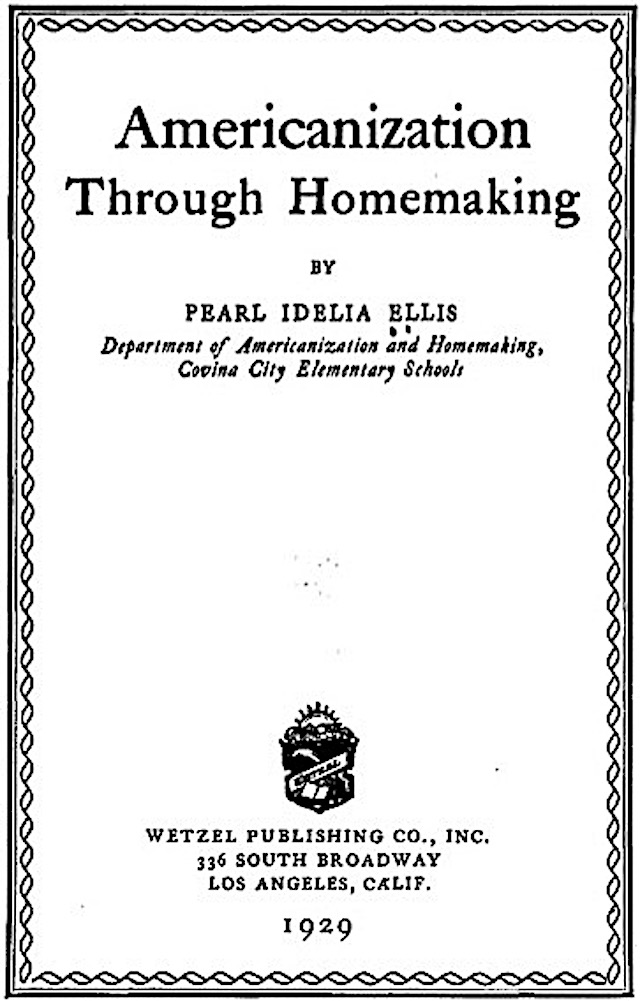
One of the most notable reformers to arise in this era was a lady by the name of Pearl Idelia Ellis, of the Department of Americanization and Homemaking, of Covina City Elementary Schools.
She was the author the guide Americanization though Homemaking which was published in 1929, detailing her work.
Mas…POCHO HISTORY 101: ‘Americanizing’ Mexicans by changing their diet
This is how they make ‘Mexican brown rice’ in Pakistan (video)
Here’s a video recipe for “Mexican Brown Rice” from Pakistani recipes on Vimeo. The long thin grains look like basmati brown rice, BTW, which is delicious. There are some weird ingredients in the recipe, however, like lemon juice. What do you think?
La Cucaracha: Janet Air, secret Area 51 airline, needs flight attendants
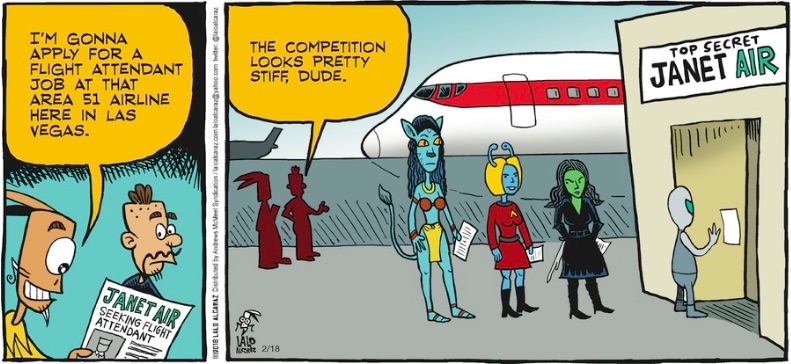
[EDITOR’S NOTE:Janet Air? Huh? Click here to learn more.]